Paltu Life Pet Services
Designing Intuitive UX for a Mobile App
Active Product Link
UX/UI Design, Information Architecture, Product Strategy
Service Focus
Fully defined, testable app prototype ready for development.
Core Outcomes
6 Months (Ongoing)
Project Duration
Inefficient Professional Management
The Problem
The success of Paltu Life relied on seamless adoption by pet management professionals (vets, groomers, etc.). Before the app’s development, vendors lacked a specialized tool to efficiently manage their operations, resulting in three major issues:
Administrative Overload
Professionals lacked a centralized, mobile-friendly system to manage core business functions, including scheduling, client record updates, and appointment reminders. This reliance on manual tools led to high administrative friction and wasted time.
Lack of Client Data Integration
Service providers couldn’t easily access the client’s comprehensive health history or communicate proactively through a unified platform. This fragmentation led to inaccurate service delivery and communication gaps.
Risk of Low Vendor Adoption
If the vendor experience was not perfectly intuitive and significantly better than existing tools, they wouldn’t use it. Starting development without a mature, tested UX blueprint for their workflow, risked losing crucial vendor participation.
Architecting a Minimum Viable Platform
The Solution
Given the limited budget, the strategic goal was to bypass expensive, full-scale development by designing and building a specialized, high-quality Minimum Viable Product (MVP) for the vendor market segment.
Phase 1
UX Research and Prototyping
Conducted user interviews with pet service providers and tested a high-fidelity prototype to validate key workflows and gather essential feature feedback before the build phase.
Phase 2
Agile, No-Code Development
Built the core functionality of the Vendor Application using the FlutterFlow no-code platform. This strategy significantly reduced time-to-market and minimized development costs.
Phase 3
Closed Alpha Launch Strategy
Defined the launch process for an initial Alpha environment, targeting a closed group of 50 vendors and 250 pet parents. This ensures real-world feature validation and workflow optimization before scaling.
Tangible Results
outcomes
The strategic architectural approach delivered immediate results focused on product viability and risk mitigation:
Risk Free market validation
The Alpha launch to 50 vendors and 250 pet parents provided essential, real-world data and usage patterns, guaranteeing that the final product will meet market needs before full, expensive development begins.
90% Reduction in Development Cost
By building the core MVP on FlutterFlow, the project bypassed high initial development costs and significantly reduced the time required to achieve a testable prototype.
Guaranteed Vendor Efficiency
Pre-launch usability testing with service providers validated that the application’s unique task flows and Information Architecture were faster and more intuitive than their current manual systems.
Ready-to-Code Blueprint
Delivery of the final, high-fidelity prototype provided the future development team with a clear, proven architectural roadmap, eliminating guesswork and further mitigating future development costs.
How Did We Get There?
Project Breakdown
Step 1: Foundation Research and Vendor Interviews
I began by conducting initial user research and direct interviews with pet service providers. This step was critical for understanding their administrative pain points and validating the need for a specialized management tool.
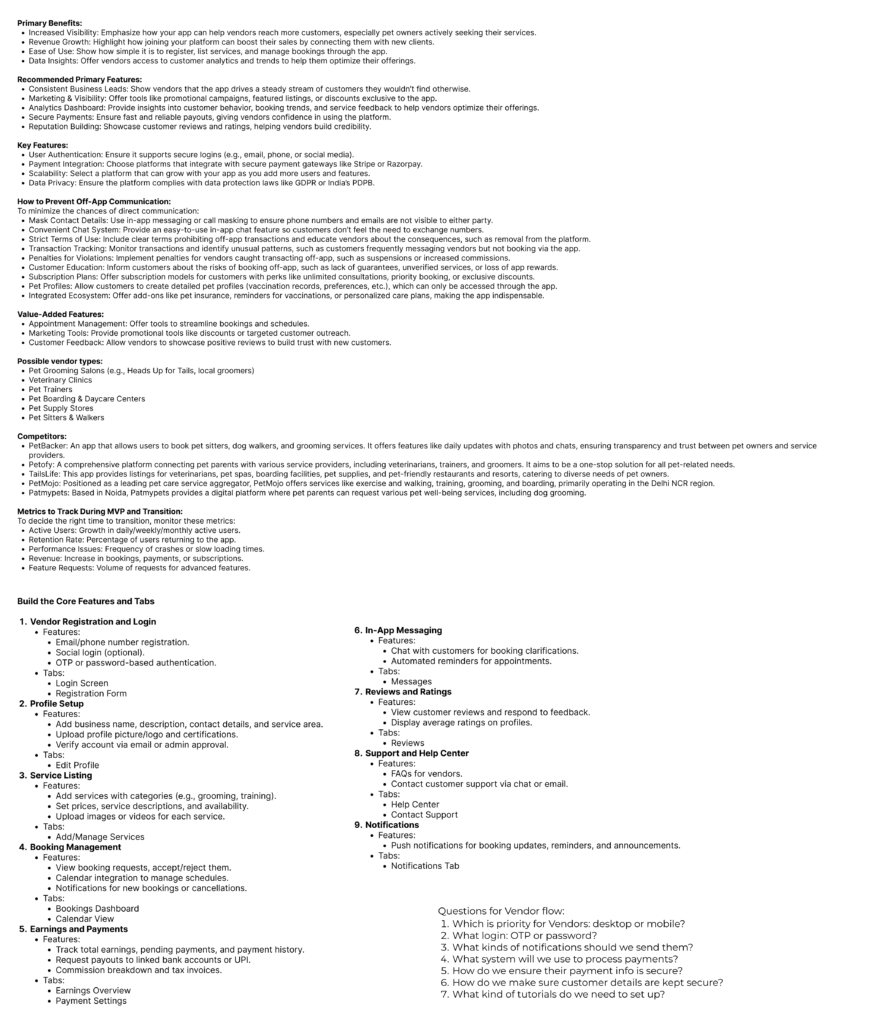
I then used ChatGPT to provide me with a product overview and feature list that was comparable to other solutions on the market.
Step 2: Architectural Blueprint Development
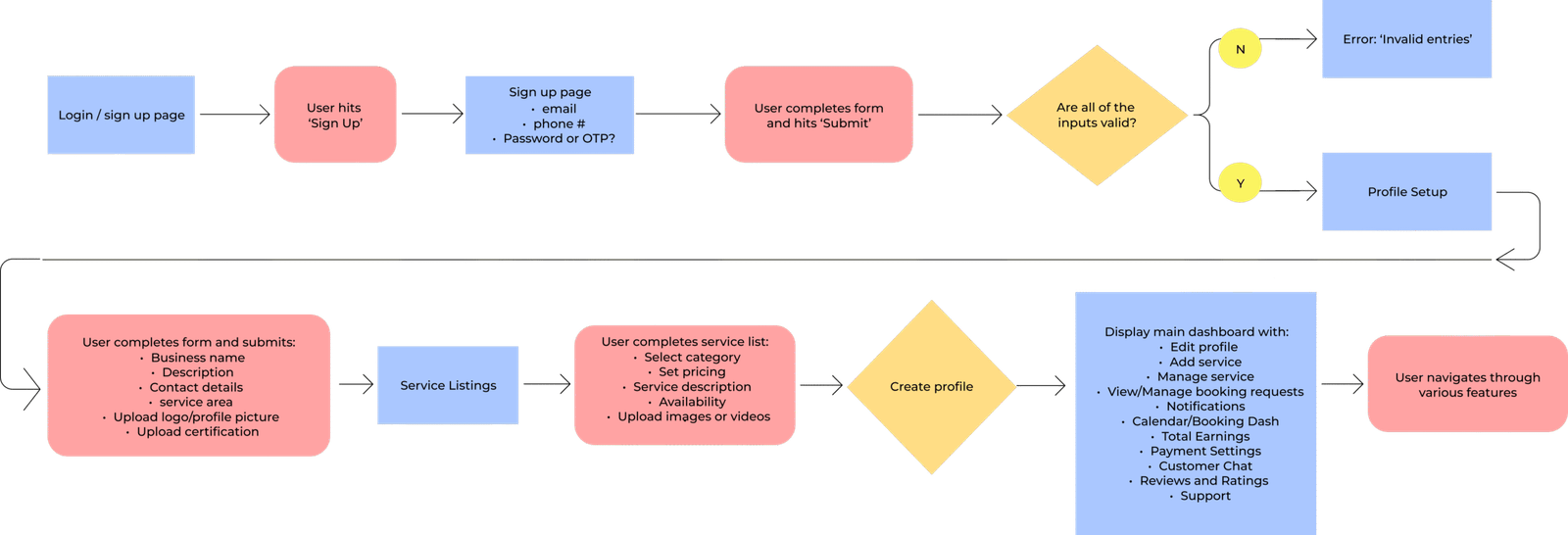
Based on the research, I defined the core task flows and Information Architecture (IA). This systematic blueprint ensured that the application’s logic prioritized vendor efficiency and provided an intuitive user journey.
Step 3: Prototyping and Low-Fidelity Design
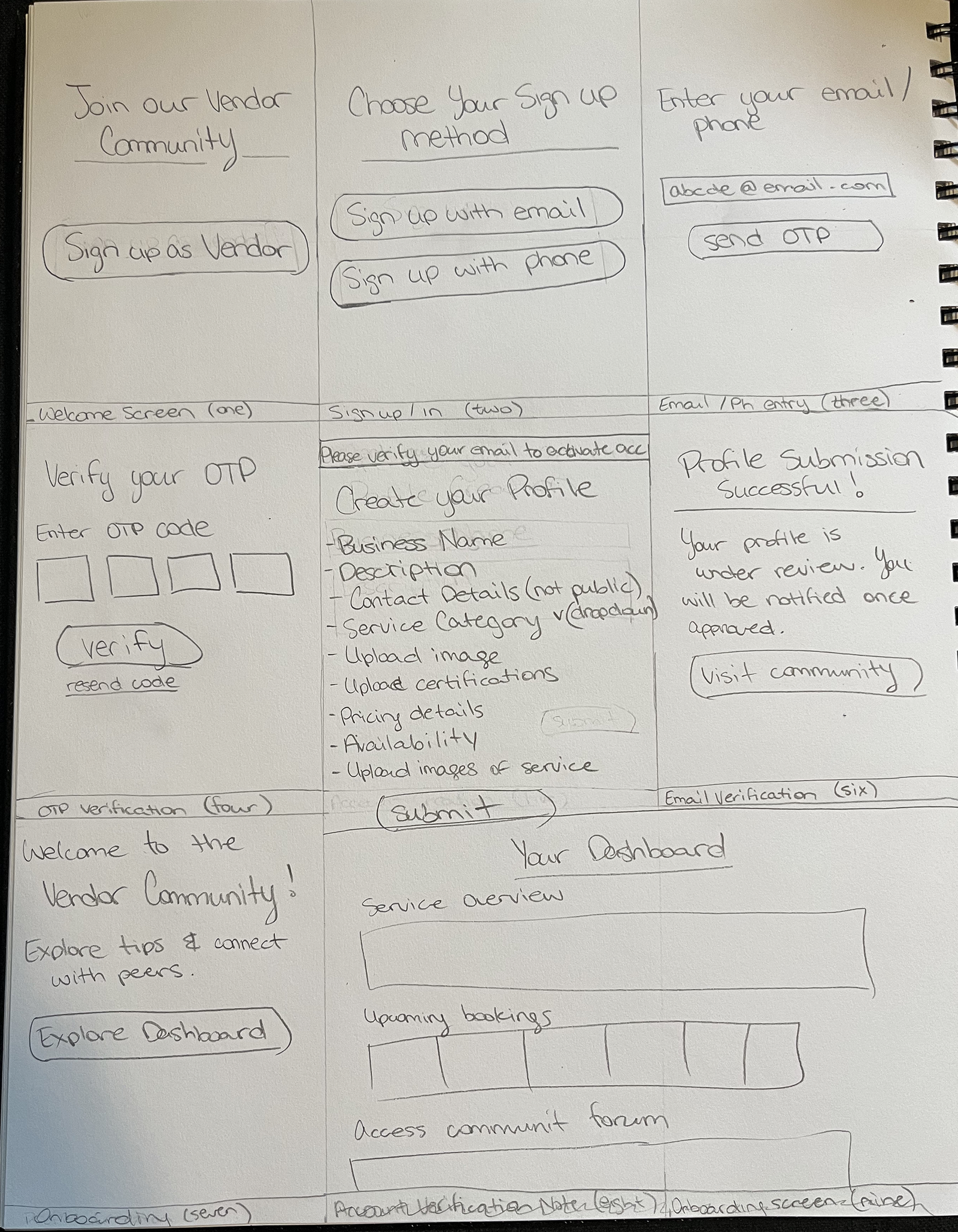
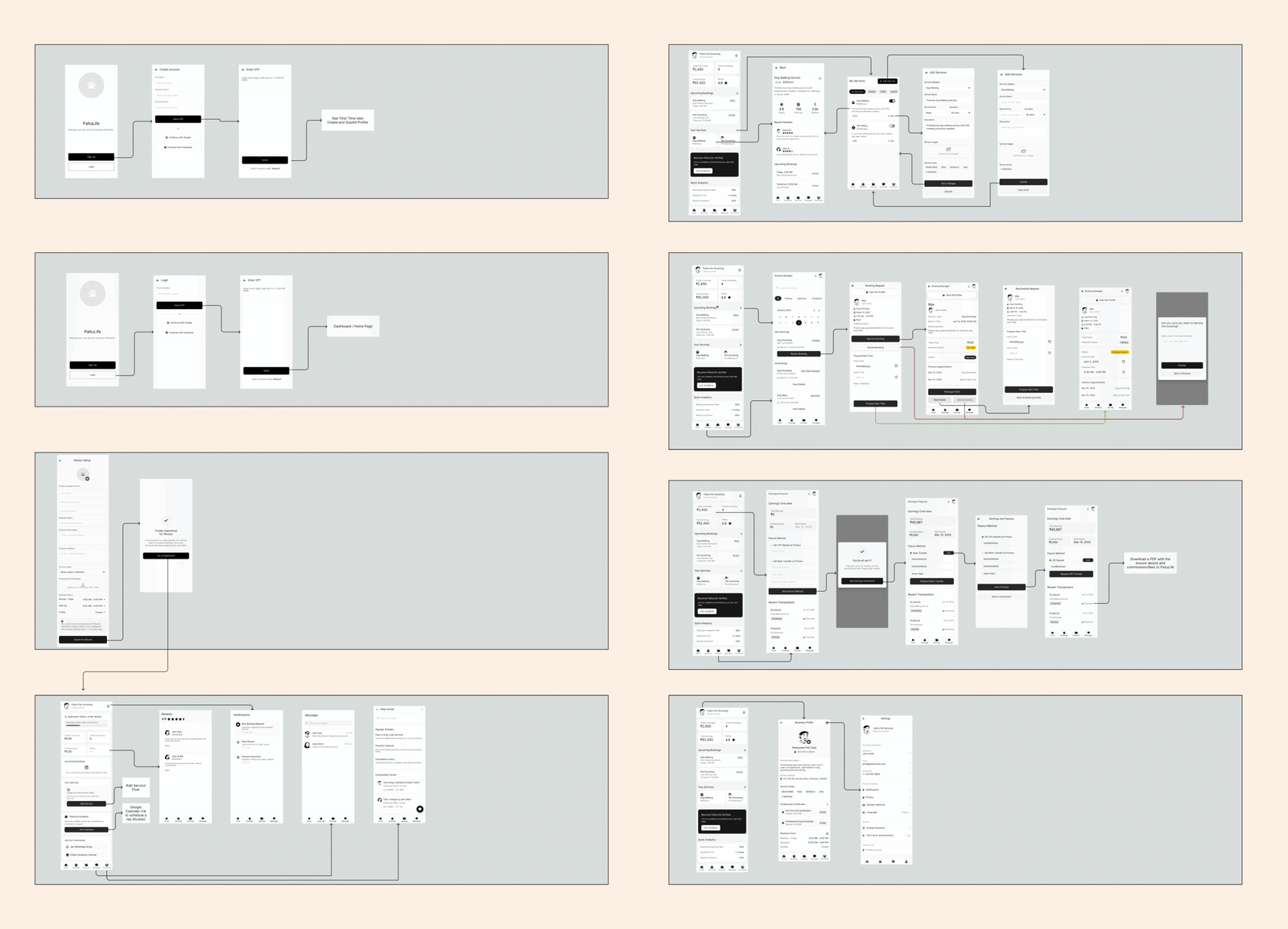
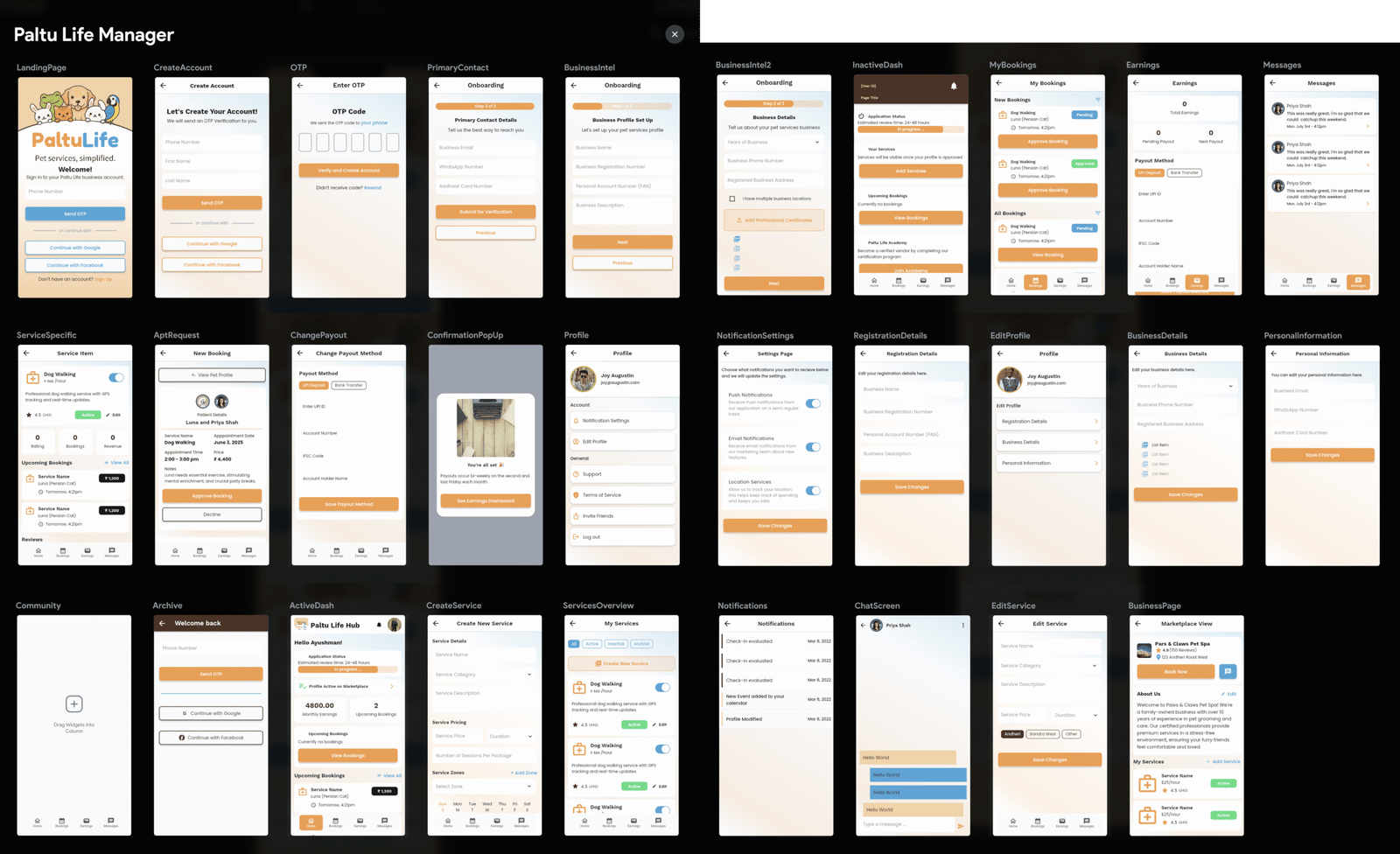
I moved from initial sketches to detailed wireframes and prototypes to visualize the final product. This high-fidelity model allowed stakeholders to confirm feature placement and functionality early in the process.
Step 4: No-Code MVP Implementation
To significantly reduce initial development costs and accelerate time-to-market, I built the core, interactive Minimum Viable Product (MVP) directly on the FlutterFlow no-code platform.
Step 5: Real-World Validation
I deployed the prototype to actual pet service providers to conduct targeted usability testing. This allowed me to gather crucial, real-world feedback on the vendor workflow and ensure the app was genuinely superior to their manual systems.
We found two critical oversights that were immediately implemented in the MVP.
- Users wanted a business overview page for all of their service listings;
- Users needed the ability to input their schedule.
Step 6: Alpha Deployment and Validation (Upcoming End of October 2025)
After integrating all final feedback, I executed the initial Alpha Launch. This deployment targeted a closed group of 50 vendors and 250 pet parents, providing essential market validation and usage data before scaling the platform.
It’s a Partnership
My role
Lead Product Architect
I led the entire product strategy and architecture. My main goal was defining the app’s structure, managing risk, and ensuring we built the most valuable product possible with zero budget.
No-Code Builder
I personally created the entire design blueprint (IA, flows, prototype) and built the functional MVP directly on the FlutterFlow no-code platform to save time and development costs.
Key Collaborators
Internal Team: Two service providers on the founding team who provided critical input for research and initial feature validation.
Pet Service Providers: SME Testers for prototype testing.